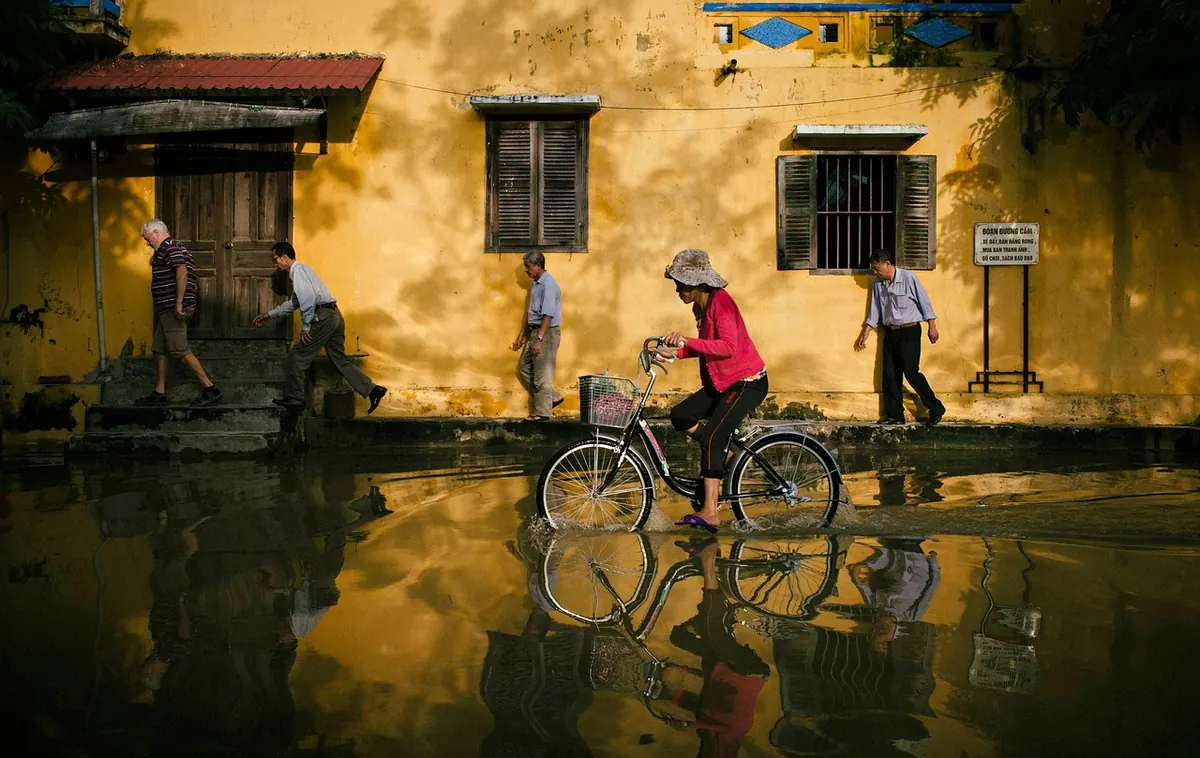
Bergen in November, Copenhagen in March, Edinburgh in almost any month you care to name: the forecast reads the same. Rain, rain, a pale grey window of something that isn't rain, then rain again. It isn't a catastrophe. It's a packing problem with different rules, because the aim isn't staying dry for one afternoon — it's staying dry, or dry enough, for a week without hauling a suitcase you can barely lift up a stairwell.
Most people overpack for the cold and underpack for the wet. They bring a heavy coat that soaks through at the shoulders and one pair of shoes that never fully dries after day two. Here's the kit that actually works, in the order worth thinking about it.
Northern European rain is usually wind-driven and often milder than the latitude suggests. Sea-level cities such as Amsterdam, Hamburg and Copenhagen rarely deliver deep cold; it's the damp chill that gets into your shoulders by four in the afternoon. Three thin layers handle that far better than one thick one, because you can shed a layer in a overheated museum and put it back on at the harbour without carrying a coat over your arm all day.
Merino or a synthetic wicking fabric. Two or three of them, not five — you'll rinse one in the sink midweek. A cotton T-shirt under a rain shell is the classic mistake: it soaks, holds the water against your skin, and takes a full day to dry. Sleep in the clean one if the room is cold.
A thin fleece, a wool jumper, a light insulated vest. Two options at most. The one you'll wear most is the one that fits under the jacket without bunching at the elbows.
This is the item worth spending on. Look for taped seams, a hood with a stiffened brim so rain doesn't run into your eyes, and pit zips so you don't cook on a tram. It should sit over your middle layer without compressing it, and it should pack into its own pocket so it can live at the top of your bag.
A good shell solves your top half. Half the problem is below the waist, and that's where most packing lists go quiet.
Waterproof trousers. Buy a pair that folds into a pouch the size of a paperback. You will feel ridiculous pulling them on outside a bakery, and then you'll walk past a queue of people sheltering under shop awnings and feel like a genius. They earn their place on ferries, on coastal paths, and on the twenty-minute walk to dinner.
Umbrella honesty. A compact umbrella is pleasant in a city of narrow streets and covered arcades. It is useless on a windy bridge or a cliff path. Take one if it folds small; don't build your plan around it.
Bags and phones. A roll-top dry bag inside your daypack costs little and weighs almost nothing. At minimum, use a rain cover and a ziplock for phone, passport and anything paper. Wet electronics end trips faster than wet socks.
Old jackets. If your shell has stopped beading and the fabric goes dark and heavy in a shower, a wash-in or spray-on water repellent will buy it another season. Check it before you leave, not in a doorway in Trondheim.
One rule handles most of the packing: everything in the bag must be able to dry overnight in a hotel room. That single test eliminates half the usual mistakes.
Bring one pair of waterproof walking shoes or boots, already broken in — wear them on the flight so they never take up suitcase space. Add one light, fast-drying pair for evenings. Skip suede, skip heavy leather, skip anything you'd mourn. Socks should be wool or synthetic, three pairs, rinsed at night.
Trousers deserve a mention because jeans are the worst thing to wear in rain: heavy when wet, slow to dry, cold against the legs for hours. One pair for the flight if you can't imagine a week without them, and quick-dry walking trousers for everything else.
On a rainy week you will do laundry, whether you planned to or not. Budget for it, and pack for it, because a sink full of cold water and a towel rail is a better laundry than most people expect.
Quantities for one week, one bag, washing once or twice.
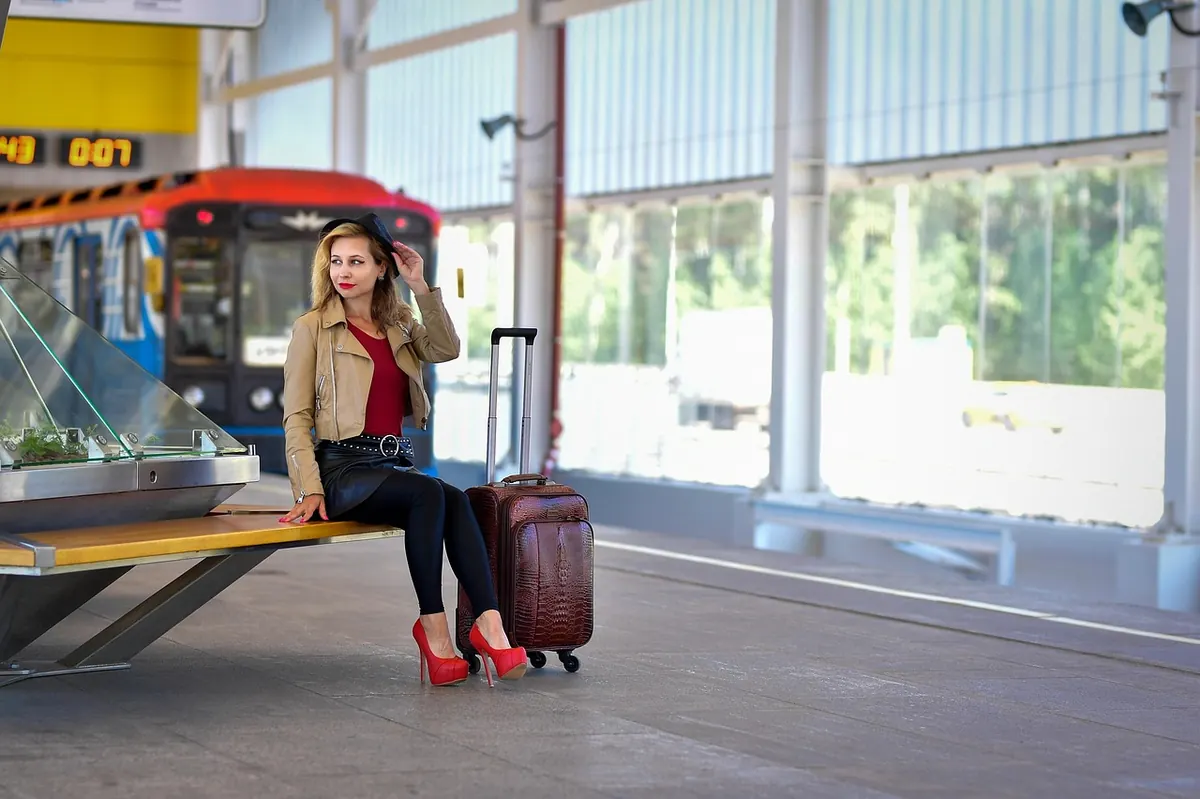
Leave at home: hard-shell luggage with no give, a second heavy coat, high heels, anything white and long, and the "just in case" outfit you've never worn on any trip so far.
Try everything on together at home, in the order you'd wear it, and walk up and down the stairs. Put the shell in the top pocket where you can reach it without unpacking. Check the forecast the morning you leave and adjust the middle layer, not the whole bag. And accept the premise: you will get wet at least once. The kit isn't there to prevent that — it's there to turn a soaking into a fifteen-minute inconvenience with a hot shower at the end, rather than three days of being cold and quietly miserable in a beautiful city.
Photo: trilemedia / Pixabay